CMA Course Fee inDubai

UAE  +971 56 1 55 44 66 –  Kuwait  +965 51 38 38 68  – Oman +968 92827852

    UAE  +971 56 1 55 44 66   

   Kuwait  +965 51 38 38 68 

BASIC LIFE SUPPORT TRAINING IN MIDDLE EAST

Gain essential life-saving skills with our Basic Life Support (BLS) training across the Middle East. Learn CPR, AED use, and emergency response techniques from certified instructors—designed for healthcare professionals and the general public alike.

Basic Life Support ( BLS ) Certification in Kuwait

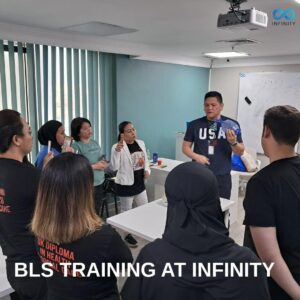
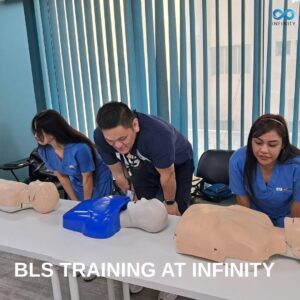
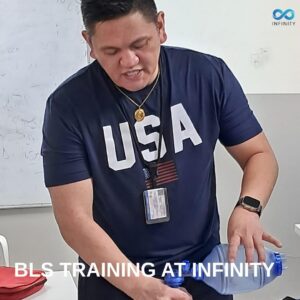
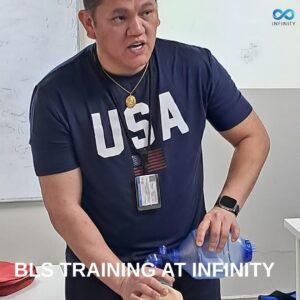
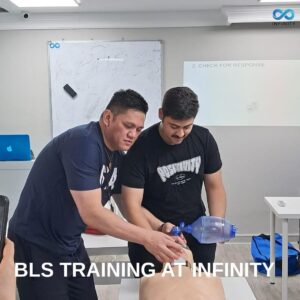
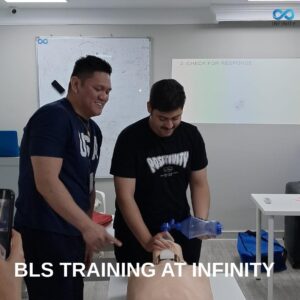
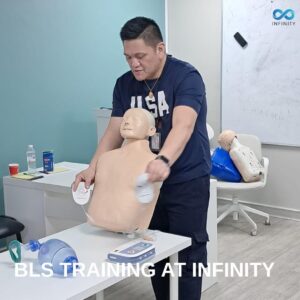
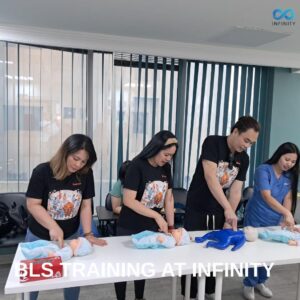
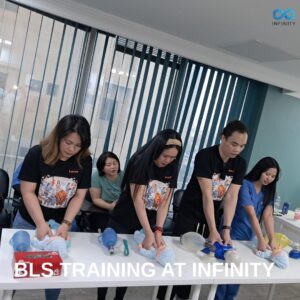
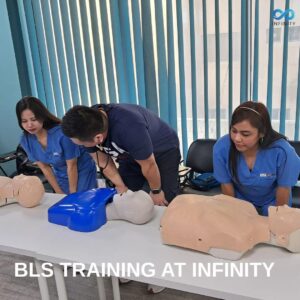
For trusted and comprehensive Basic Life Support (BLS) Training in the Middle East, choose Infinity Training Center. Our internationally recognized BLS courses are designed to equip you with vital life-saving skills to respond quickly and confidently during emergencies. With expert instructors and modern training facilities, we emphasize hands-on practice and real-life emergency scenarios to ensure you gain the confidence to act effectively.

During our BLS Course in the Middle East, participants learn essential techniques such as CPR, AED usage, and airway management—skills that can make the difference between life and death. Our BLS certification programs follow international standards, including the 2020 AHA Guidelines Update for CPR and ECC, ensuring the highest level of training quality and global acceptance.

At Infinity Training Center Middle East, we offer flexible schedules that cater to both healthcare professionals and non-medical individuals seeking to develop or renew their life-saving skills. The BLS Course is approved for continuing education hours for Emergency Medical Services (CAPCE) and Dental professionals (AGD/PACE), and is accepted by the National Registry of Emergency Medical Technicians (NREMT).

Whether you are a first-time learner or renewing your certification, our Basic Life Support training in the Middle East prepares you to respond swiftly to cardiac arrests, choking incidents, and other life-threatening emergencies. Enroll today at Infinity Training Center and gain the skills, confidence, and certification you need to save lives.

BLS Certification in the Middle East

At Infinity Training Center, our BLS Certification in the Middle East is officially approved by Kuwait’s Ministry of Health for granting or renewing licenses for healthcare professionals, including nurses, doctors, paramedics, and other medical staff. This recognition ensures that our BLS Training in the Middle East meets the highest standards and regulatory requirements set by government health authorities.

Our BLS Course in the Middle East is designed to equip participants with the essential knowledge and practical skills needed to provide immediate and effective life-saving care. The Ministry of Health approval assures both healthcare professionals and the public that our program delivers safe, standardized, and reliable training in line with international and national healthcare guidelines.

By earning your Basic Life Support (BLS) Certification in the Middle East through Infinity Training Center, you gain not only professional credibility but also the official authorization to perform your medical duties with government-approved qualifications.

Basic Life Support Training

HSI Approved Training Center

The Health & Safety Institute (HSI) offers numerous highly-rated courses and efficient, cost-effective delivery methods. Nationally accredited in Emergency Medical Service (EMS) by CAPCE, HSI's programs align with the standards of over 5,000 state regulatory agencies, licensing boards, and national associations across 550+ professions.
Basic Life Support Training

ASHI Approved Training Center

The American Safety and Health Institute (ASHI), headquartered in Eugene, OR, offers CPR, First Aid, and related certifications. ASHI, now under the Health & Safety Institute (HSI), provides recognized training in CPR, First Aid, and more, widely accepted alongside American Red Cross and American Heart Association certifications. Courses cover CPR, AED, Emergency Medical Responder, Basic Life Support, and Advanced Cardiac Life Support.
Basic Life Support Training

Who Should Attend our BLS Training

Healthcare Professionals: ​

Doctors, nurses, paramedics, and other medical personnel who require BLS certification as part of their job responsibilities.


First Responders:

Police officers, firefighters, and emergency medical technicians (EMTs) who may encounter medical emergencies in the line of duty.


Workplace Safety Teams:​

Employees designated to respond to medical emergencies in the workplace, such as designated first aiders or safety officers.​


Educators and School Staff:

Teachers, administrators, and other school personnel who may need to provide emergency medical assistance to students or colleagues


Laypersons:

Anyone interested in learning life-saving skills to assist in emergency situations, including bystanders who may witness a medical crisis in public settings.

BLS ( Basic Life Support ) Class topics as per HSI USA

  1. Introduction to BLS 
    Sudden Cardiac Arrest 
    Adult BLS Procedure/Assessment 
    Adult Compressions 
    Adult Airway
    Adult Breathing 
    Adult Automated External
    Defibrillation
    Adult CPR: One BLS Provider
    Adult CPR: Multiple BLS Providers 
    Additional Adult BLS Considerations 
    Pediatric Chains of Survival 
    Child BLS Procedure/Assessment 
    Adult CPR: Teamwork in HighPerformance Resuscitation
    (Optional Skill Practice)
    Child Compressions
  1. Child Airway and Breathing
    Child Automated External
    Defibrillation
    Child CPR: One BLS Provider
    Child CPR: Multiple BLS Providers
    Infant BLS Procedure/Assessment
    Infant Compressions
    Suspected Opioid-Associated
    Emergency
    Infant Airway and Breathing
    Infant Automated External
    Defibrillation
    Infant CPR: One BLS Provider
    nfant CPR: Multiple BLS Providers
    Relief of Choking
    Infant CPR: Teamwork in High Performance Resuscitation
    (Optional)

Student certification requirements

Written evaluation: Successful completion requires a correct score of 74% or better. 


Performance Evaluation: Demonstrate skill competency as indicated by the skill criteria on the “Adult BLS” and “Infant BLS” skill sheets.

Recognized certification period

Up to 2 years

Recommended Time to complete

• Initial training: 5 hours
• Renewal training: 2 hours
Frequently Asked Questions

Who is the intended audience for the HSI BLS training program?

The intended audience includes healthcare providers (both in and out of hospital), public safety professionals in various occupational settings, and individuals enrolled in healthcare and public safety career training programs.

How long is the certification period for the HSI BLS program?

The certification period is 2 years from the month of issue.

What is the recommended time to complete the initial instructor-led BLS class?

The recommended time to complete the initial instructor-led class is about 5 hours.

What are the student certification requirements for the HSI BLS program?

Students must successfully complete the 21-question BLS written exam and demonstrate skill competency as indicated by the skill criteria on the “Adult BLS” and “Infant BLS” Performance Evaluation Sheets.

What is the recommended time for completing the renewal instructor-led BLS class?

The recommended time for completing the renewal instructor-led BLS class is about 2 hours.

What are the student-to-instructor and student-to-manikin ratios for the HSI BLS class?

The recommended student-to-instructor ratio is 6:1 (maximum 10:1) and the student-to-manikin ratio is 1:1 (maximum 3:1).

What delivery options are available for the HSI BLS training program?

The delivery options include Traditional Classroom, Blended Learning, and Remote Skill Verification (RSV).

What topics are covered in the HSI BLS training program?

Topics covered include Introduction to BLS, Sudden Cardiac Arrest, Adult BLS Procedure/Assessment, Adult Compressions, Adult Airway, Adult Breathing, Adult Automated External Defibrillation, Adult CPR (One and Multiple BLS Providers), Suspected Opioid-Associated Emergency, Pediatric Chains of Survival, Child BLS Procedure/Assessment, Child Compressions, Child Airway and Breathing, among others.

What instructional materials are provided for the HSI BLS class?

Instructional materials include the HSI BLS Skill Guide, HSI BLS Instructor Guide (print or digital), HSI BLS digital class presentation, and a digital student book available upon completion.

Is there an online portal for the HSI BLS training program?

Yes, the online portal includes a streaming/offline video presentation player, custom playlists creation, pre-built digital Performance Evaluations, and the ability to track past, present, and future classes.

What continuing education hours are available through the HSI BLS program?

Continuing Education Hours are available for Emergency Medical Services (CAPCE) and Dental Professionals (AGD/PACE).

What is the purpose of the HSI BLS program?

The purpose of the HSI BLS program is to keep healthcare professionals prepared and ready to respond to medical emergencies, specifically basic life support and choking incidents, in a variety of settings.

What are the available formats for the digital student book in the HSI BLS program?

The digital student book is available in multiple formats upon class completion, providing flexible options for learners.

How does the blended learning option for the HSI BLS program work? The blended learning option includes an online component of approximately 2 ¾ hours, followed by a face-to-face component of about 2 ¼ hours for practical skill application and assessment.

The blended learning option includes an online component of approximately 2 ¾ hours, followed by a face-to-face component of about 2 ¼ hours for practical skill application and assessment.

What is included in the digital class presentation for the HSI BLS program?

The digital class presentation includes visual aids and instructional materials designed to enhance the learning experience, ensuring that participants can easily follow along and understand the BLS procedures and protocols.

Gallery

Related Courses